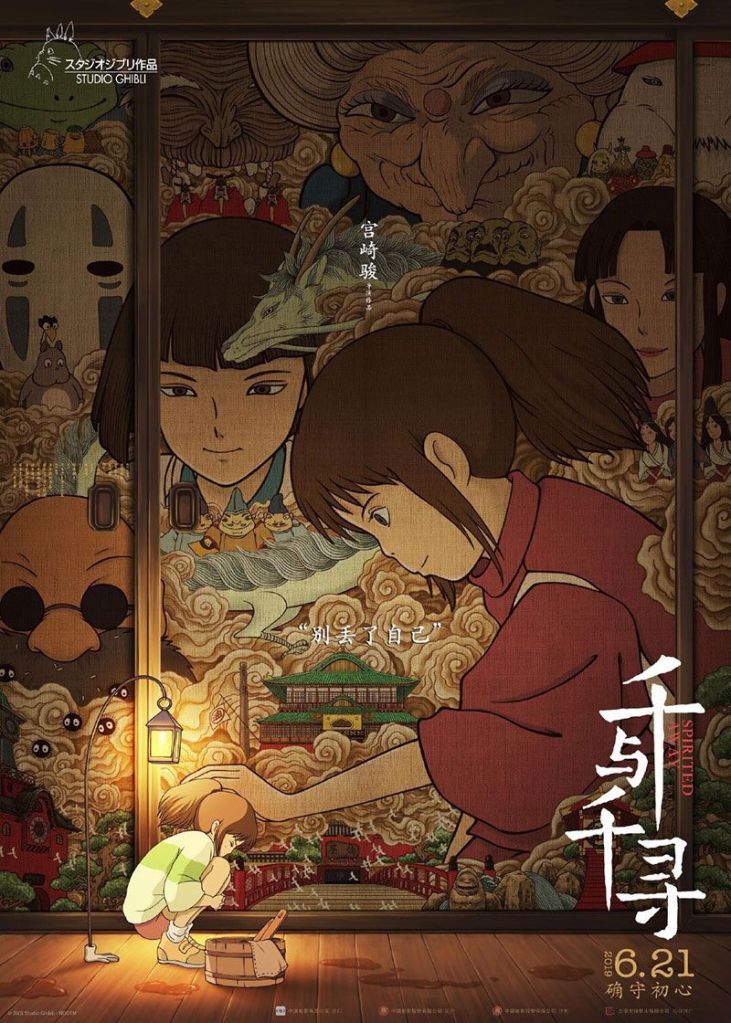
Spirited Away, is a 2001 Japanese animated coming-of-age fantasy film. It was written and directed by Hayao Miyazaki, animated by Studio Ghibli. Spirited Away tells the story of Chihiro Ogino (Hiiragi), a moody 10-year-old girl who, while moving to a new neighbourhood, enters the world of Kami (spirits) of Japanese Shinto folklore. After her parents are transformed into pigs by the witch Yubaba (Natsuki), Chihiro takes a job working in Yubaba’s bathhouse to find a way to free herself and her parents and return to the human world. The film was originally released in Japan on 20 July 2001 by distributor Toho. It became the most successful film in Japanese history, grossing over $361 million worldwide.
There’s so much to Spirited Away that it’s tough to tackle it from one angle. The first part of this piece will discuss how the film practically redefines what we should expect from animation (traditional or digital). The second part will dig into the film’s themes and ideas to see how Spirited Away not only entrances us with its visuals but also with its content.
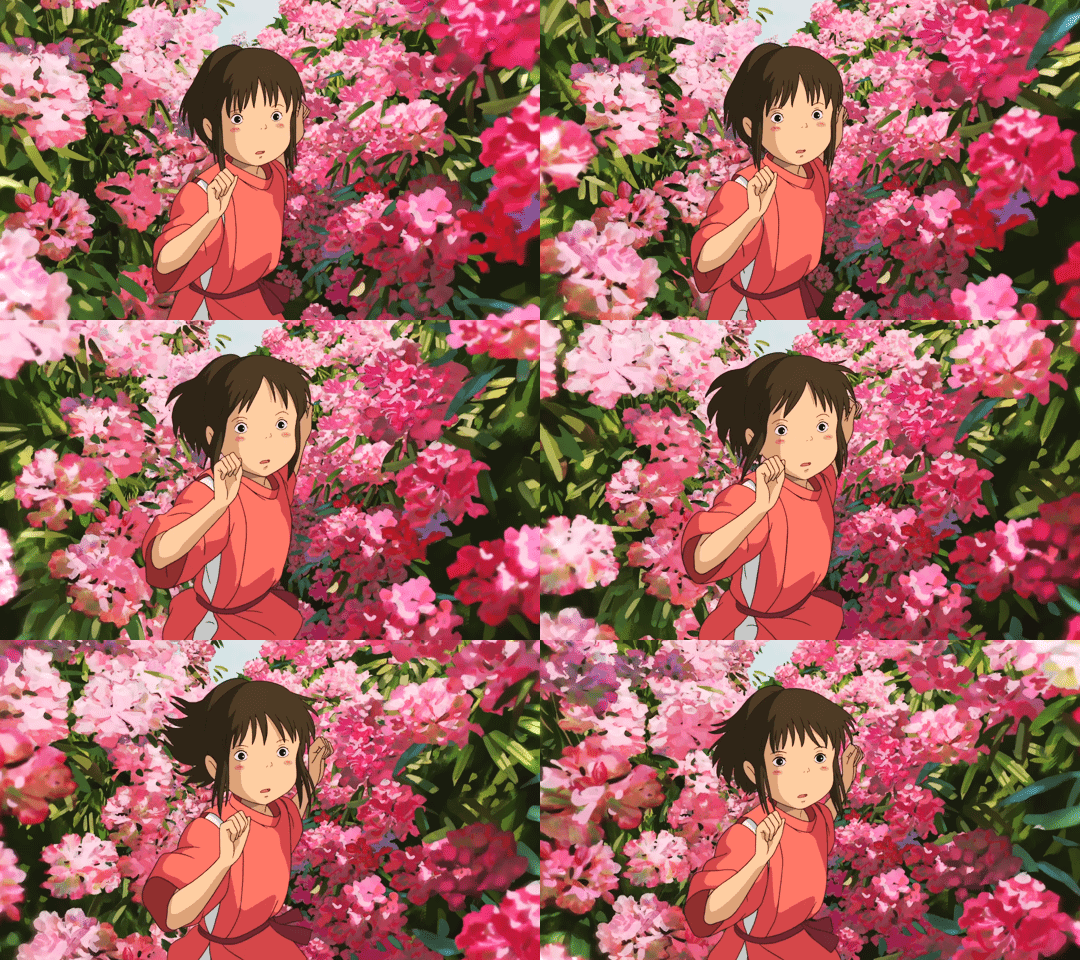
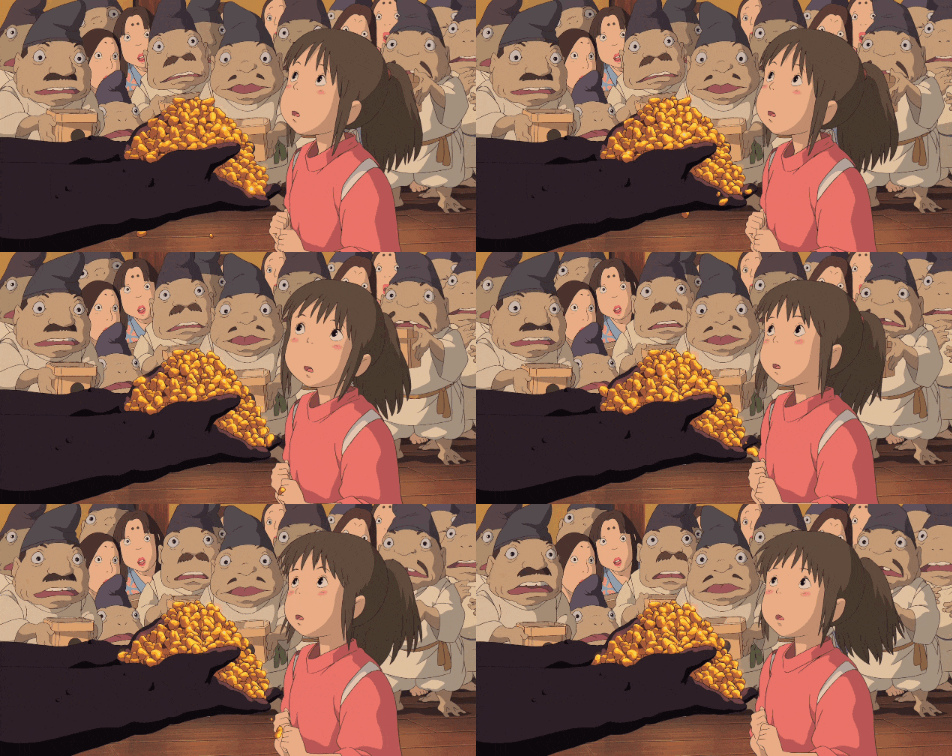
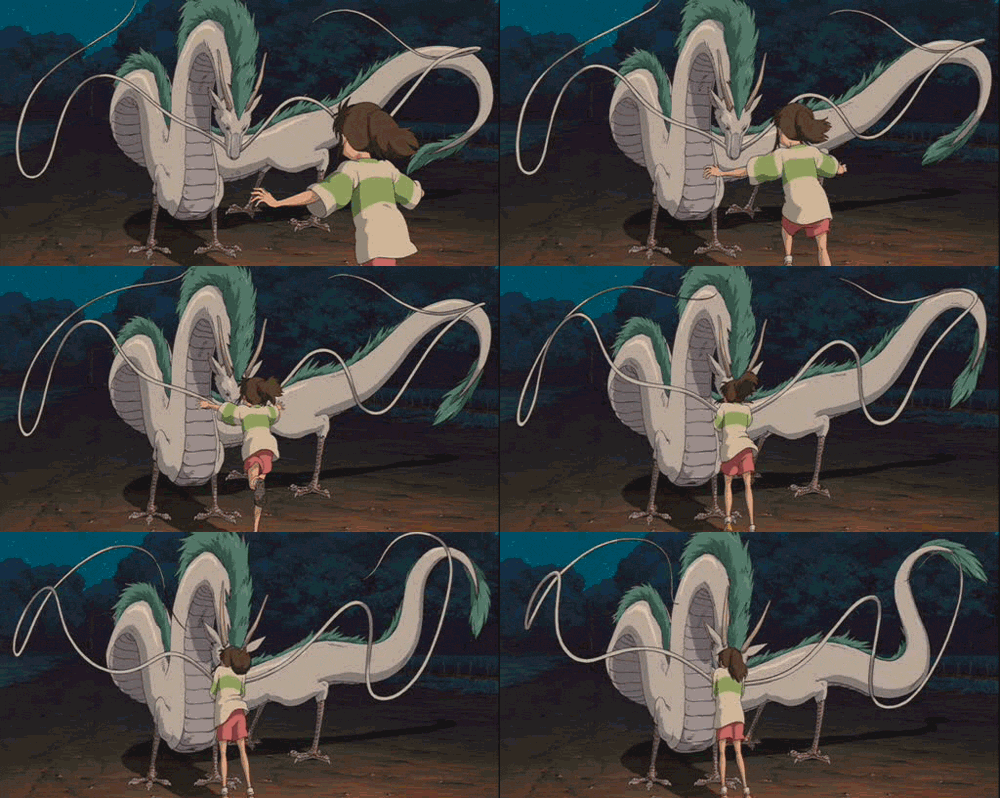
The one thing that is most impressive about Spirited Away is how alive almost every frame of animation is. Even the hand-drawn backgrounds, which are devoid of actual movement, sparkle with life. This “life” is present in large scenes like our introduction to the bathhouse where what seems like hundreds of different and creative spirits are congregating. Every aspect of a big scene like this throbs with motion, creating an animated film that feels more alive than most non-animated ones. We’re thrown into a massive world of ideas, but the attention to detail on every subject we see is stunning.
It’s this detailed view of the world that separates Spirited Away’s animation from all others. Large scenes, like the introduction to the bathhouse, play out in animated films all the time, but the smaller scenes that are routinely present in Spirited Away do not. Take the Susuwatari (tiny, living dust balls who man the bath house’s furnace). While they play a role in the film, many of the scenes are almost completely irrelevant to the actual plot. Instead of attempting to move the story along as fast as possible Miyazaki pushes instead to establish a world by paying attention to (admittedly adorable) minutia. Most animated films veer away from the extra movement in a scene as it means extra animation work, but Spirited Away not only puts extra animation into pivotal scenes but also adds entire scenes that are not “needed.” In this way Spirited Away doesn’t just tell a story, it creates a world.
It’s an amazing world to look at, too. Miyazaki understood this and it’s so blatantly clear from the film’s direction how much the fine folks at Ghibli love what they do and the art of animation. This is apparent throughout the film, but once again it’s the less obvious scene that makes the point. Take Chihiro’s family’s first steps into what they think is an old amusement park. The family walked into what looks like a small train station or waiting room. Instead of a quick establishing shot to the outside of the building to show where they are, the camera slowly pans across the beautifully painted background as if it is savouring every brush stroke. It then cuts to a shot of light streaming through one of the room’s windows. It’s not a special window and it doesn’t have any real purpose, but it might be one of the most important shots for establishing tone in the film. This devoted focus on presenting the art behind the film is not only a testament to Ghibli’s love of the medium, but creates a deeper world for the viewer to get lost in.
Beyond becoming fully immersed in the world, what is there to understand? Surprisingly, a lot. Even more surprising, for a film released in 2001, a lot of relevant issues crop up today. Looking at Spirited Away at its most basic level we see an adventure about a girl. Peeling back that level the film opens up to two other interpretations. The first is pretty easy to notice: growing up. Taking a cue from Alice in Wonderland, Spirited Away turns the awkward move from childhood to adulthood into a fantasy metaphor. Anyone with even a cursory viewing of the film can easily see Chihiro’s growth from a scared girl crying out to her parents to a mature child growing into herself. She falls in love, learns about loss, and through her interactions with the spirits in the bathhouse discovers that the world isn’t so black and white. Played against the foil of Yababa this growing up metaphor becomes even stronger. Yababa steals Chihiro’s name effectively killing her child self and is the mother who won’t let her child grow up in contrast to Chihiro, who is forced to.
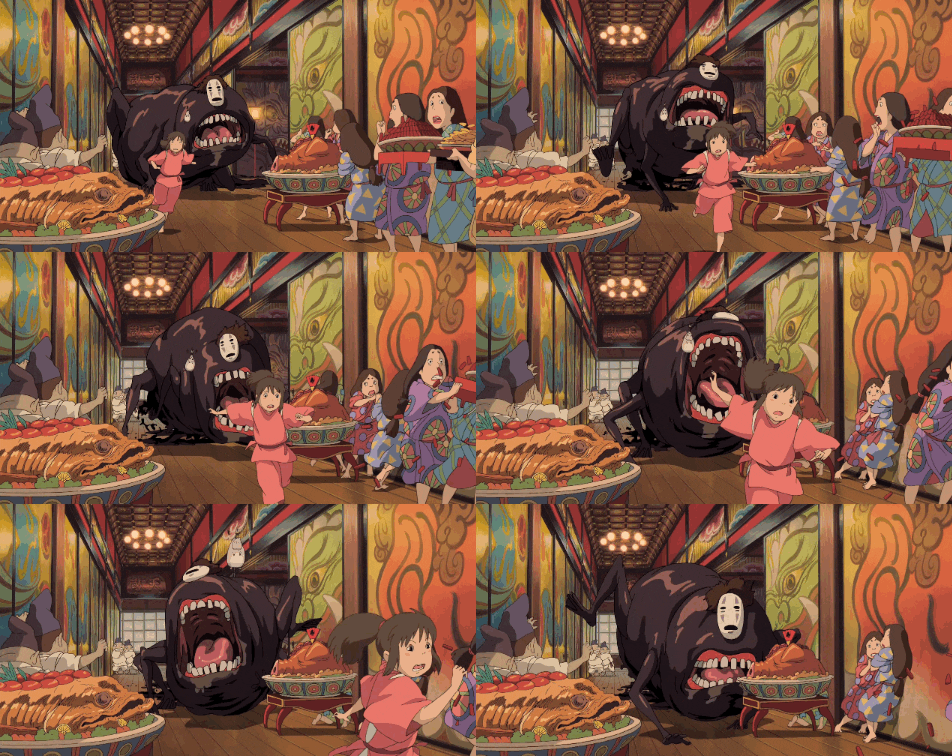
That metaphor is pretty obvious though as it’s part of the plot as well. What stood out for me upon my re-watching of the film this time around is how much it speaks to societies flaws, the burned economy and the constant pull between the past and the present. I’m sure these things have been noted before, but it’s incredible how much more appropriate they seem today after our current financial crisis. In 2001, Japan’s economy was already crumbling so many of the economic themes of the film relate to that originally, but are now all the more appropriate post-Great Recession. The bathhouse, in general, can easily be interpreted as the pre-recession economy as it explodes in wealth and luxury. No Face, a creature who usurps the identity and actions of those around it, sees the overwhelming consumption of the bathhouse (and to a lesser extent Chihiro’s parents) and duplicates it. In the process of his non-stop consumption, he destroys the very house that is feeding him and yet no one thinks to stop him until it is too late. This interpretation of the film puts Chihiro squarely in the role of the “next generation.” Much like a college student graduating into a depressed economy where they’ve been promised a job, she comes kicking and fearful into the bathhouse unsure of what or where she is supposed to go. However, she eventually recognizes the issues with the culture of the place she is in and realizes that personal sacrifice and growth are the only way to change what is happening around her. Her maturation as a person is what the film believes society needs to do to move beyond where we are. While the film has a clear and obvious fascination with (if not love for) Japanese past, it’s Chihiro, a modern child, who must act to move the world forward.
 MONO drama